What Is SENSEX? Meaning, Calculation & Role in the Indian Stock Market
Published: 5 min read
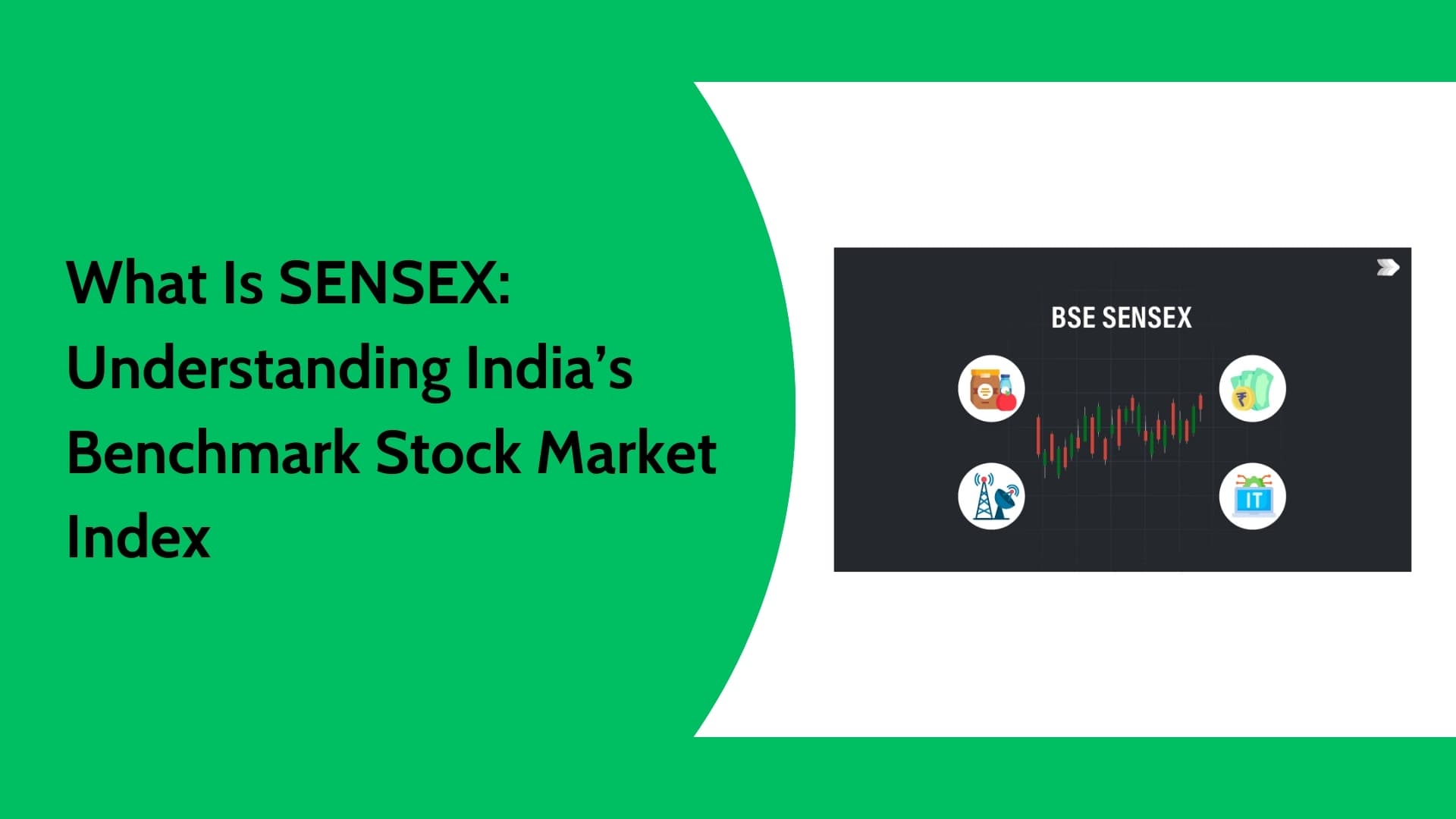
What Is SENSEX? Understanding India’s Benchmark Stock Market Index
What Is SENSEX?
The SENSEX is one of the most widely followed stock market indices in India. It represents the performance of 30 financially strong and actively traded companies listed on the Bombay Stock Exchange. Because of this, it is often considered a barometer of the Indian stock market.
When people say “the market is up today” or “the market crashed,” they are usually referring to movements in indices like SENSEX or Nifty. If SENSEX rises, it generally indicates that the market is performing well. If it falls, it suggests that investors are cautious or selling their holdings.
SENSEX plays a crucial role in helping investors, analysts, and policymakers understand the overall direction of the market.
History of SENSEX
The SENSEX was introduced in 1986 by the Bombay Stock Exchange. It was designed to track the performance of the largest and most influential companies in India.
Over time, the index has become a benchmark for measuring the growth of the Indian stock market. As the Indian economy expanded and new sectors emerged, the composition of SENSEX evolved to include companies from diverse industries such as banking, IT, manufacturing, energy, and consumer goods.
Today, SENSEX is not just an index. It is a reflection of India's economic progress and corporate growth.
What Does SENSEX Represent?
SENSEX represents 30 large, well-established companies listed on the Bombay Stock Exchange. These companies are chosen based on several factors:
● Market capitalization
● Liquidity and trading volume
● Industry representation
● Financial stability
Because these companies are leaders in their sectors, their performance gives a good indication of the broader Indian stock market.
For example, if major banking, technology, and energy companies are performing well, the SENSEX usually moves upward.
How SENSEX Is Calculated
SENSEX is calculated using the free-float market capitalization method.
This method considers only the shares available for public trading, excluding shares held by promoters, governments, or strategic investors.
The calculation follows this simplified process:
- Determine the free-float market capitalization of each company.
- Combine the market values of all 30 companies.
- Adjust the value using a base index number.
The result is the SENSEX value that investors see every day.
When stock prices of the companies in the index rise, the SENSEX moves higher. When their prices fall, the index declines.
Why SENSEX Is Important for Investors
SENSEX is an important indicator for both beginner and experienced investors.
1. Market Performance Indicator
SENSEX shows the overall direction of the Indian stock market. Investors use it to understand whether the market is bullish or bearish.
2. Investment Benchmark
Mutual funds, portfolio managers, and institutional investors compare their performance against SENSEX to evaluate returns.
3. Economic Signal
Because it tracks leading companies, SENSEX often reflects the economic health of the country.
4. Investor Sentiment
A rising SENSEX typically indicates investor confidence, while a falling index may reflect uncertainty or negative sentiment.
Role of the Bombay Stock Exchange
The Bombay Stock Exchange is Asia’s oldest stock exchange and one of the largest exchanges in the world.
It provides the platform where investors buy and sell shares of publicly listed companies. SENSEX is the flagship index of the Bombay Stock Exchange and serves as a benchmark for measuring market performance.
The exchange ensures transparency, fair trading practices, and efficient settlement systems for investors participating in the market.
How a Demat Account Helps You Invest
To participate in the Indian stock market, investors must open a Demat Account.
A Demat Account allows investors to hold shares in electronic form instead of physical certificates.
Benefits of having a Demat Account include:
● Secure storage of shares
● Faster transactions
● Easy tracking of investments
● Ability to invest in stocks, ETFs, and mutual funds
Once you have a Demat Account, you can buy shares of companies listed on exchanges like the Bombay Stock Exchange and track their performance alongside indices like SENSEX.
SENSEX vs Other Market Indices
While SENSEX tracks companies listed on the Bombay Stock Exchange, there are other indices in the Indian market as well.
For example:
● Nifty 50 tracks 50 companies listed on the National Stock Exchange.
● Sectoral indices track companies within specific industries.
Despite these alternatives, SENSEX remains one of the most trusted indicators of the Indian stock market because of its long history and established credibility.
How SENSEX Affects Investment Decisions
Investors often use SENSEX movements as a signal for investment opportunities.
For example:
● A rising SENSEX may indicate strong market momentum.
● A falling SENSEX may present buying opportunities for long-term investors.
● Market corrections sometimes help investors enter quality stocks at better prices.
However, investors should always analyze individual companies rather than relying only on index movement.
SENSEX and the Growing Interest in Unlisted Shares
While SENSEX tracks companies already listed on the stock exchange, many investors today are exploring opportunities before companies reach that stage.
This is where Unlisted Shares come into the picture.
Unlisted Shares represent companies that are not yet publicly traded but may have strong growth potential. Investors often look at these opportunities before a company launches its IPO.
Platforms like Unlisted Valley help investors track prices, research companies, and explore opportunities in the private market before they enter the public market.
Understanding both listed markets like SENSEX and private markets such as Unlisted Shares can help investors build a more diversified portfolio.
The more informed an investor is about market structures, the better they can identify opportunities across both public and private markets.
FAQs
What is SENSEX in simple terms?
SENSEX is the benchmark stock market index of the Bombay Stock Exchange that tracks the performance of 30 major companies in the Indian stock market.
Why is SENSEX important?
SENSEX helps investors understand overall market performance and investor sentiment in the Indian stock market.
How many companies are included in SENSEX?
SENSEX consists of 30 financially strong and actively traded companies listed on the Bombay Stock Exchange.
Do I need a Demat Account to invest in SENSEX companies?
Yes. Investors need a Demat Account to buy and hold shares of companies listed on the Bombay Stock Exchange.
Are Unlisted Shares part of SENSEX?
No. Unlisted Shares belong to companies that are not yet listed on stock exchanges. SENSEX only includes publicly listed companies.
Disclaimer
This content is for informational and educational purposes only and should not be considered financial or investment advice. Investments in the Indian stock market and Unlisted Shares involve risks. Investors should conduct their own research or consult a financial advisor before making any investment decisions.