Trading vs Investing: Understanding Stock Investing and Trading
Published: 5 min read
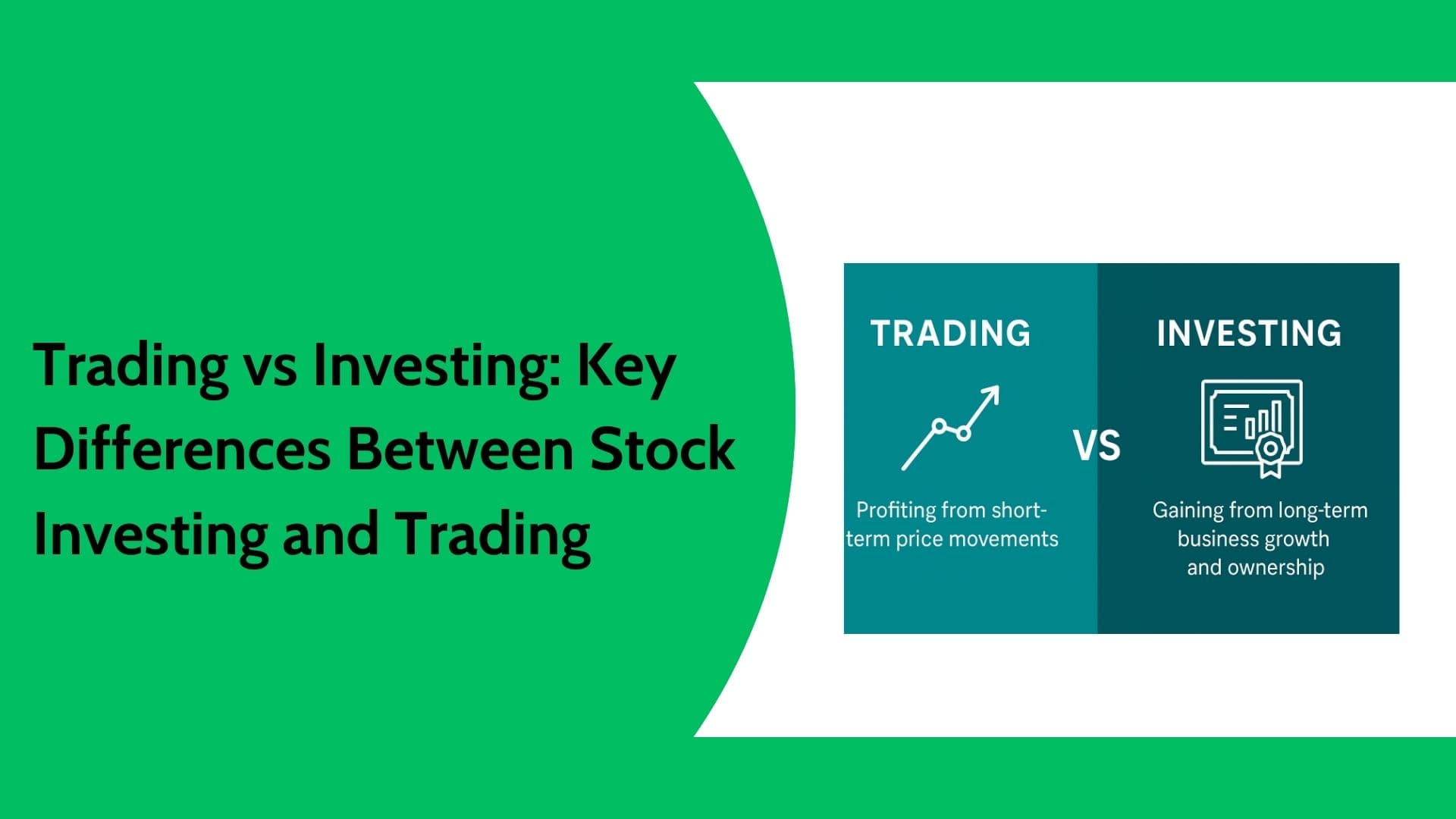
Trading vs Investing: Key Differences Between Stock Investing and Trading
Introduction
Anyone who starts learning about the stock market quickly comes across the debate around trading vs investing. At first, the two can look almost identical. In both cases, people buy shares of companies and later sell them. But once you look closer, the difference becomes much clearer.
Some market participants spend years building long-term portfolios. Others prefer to take advantage of short-term price movements. Both approaches exist in the same market, and both attract different types of participants.
Understanding the difference between investing and trading is important before putting money into the market. The choice between the two can influence how much time you spend studying the market, how you manage risk, and what type of strategy you follow.
What Is Stock Investing?
Stock investing is generally associated with patience. Investors buy shares of companies they believe will grow over time. Instead of focusing on daily price movements, they concentrate on the company’s long-term performance.
For example, an investor might purchase shares in a company and hold them for several years. The expectation is that as the company expands its business, its stock price will also increase.
In the context of stock investing and trading, investors typically analyze:
● Company earnings
● Business model
● Industry trends
● Long-term growth potential
If the fundamentals look strong, investors may hold the stock for years rather than trying to profit from short-term price swings.
What Is Stock Trading?
Trading follows a different mindset. Traders are usually less interested in long-term company growth and more focused on short-term market movements.
In simple terms, trading is about identifying opportunities in price changes.
A trader might buy a stock in the morning and sell it before the market closes, or hold it for a few days depending on the strategy. Because of this, trading often requires constant monitoring of the market.
In stock investing and trading, traders commonly rely on:
● Technical charts
● Market trends
● Price patterns
● Trading indicators
This approach makes trading more active compared to investing.
Trading vs Investing: Understanding the Key Differences
Although both involve the stock market, the difference between trading vs investing becomes clear when you look at how participants approach the market.
Time Horizon
Investors usually take a long-term view. They may hold stocks for several years, sometimes even decades.
Traders, on the other hand, operate on much shorter timelines. Some trades last only minutes or hours.
Decision Making
In investing and trading, the decision-making process is different.
Investors focus on company fundamentals such as earnings growth or industry potential. Traders tend to rely more on price charts and technical signals.
Risk Exposure
Trading generally involves higher short-term risk because market prices can move quickly.
Investing tends to spread risk across time since investors hold assets for longer periods.
Market Activity
Another visible difference between trading vs investing is how frequently transactions occur.
Traders might execute several trades within a single week, while investors may add to their portfolio gradually over time.
Why a Demat Account Is Necessary
Regardless of whether someone prefers investing or trading, a Demat Account is required to participate in the stock market.
A Demat Account stores shares electronically and allows investors to buy and sell stocks without dealing with physical certificates.
Having a Demat Account offers several advantages:
● Secure digital storage of shares
● Faster settlement of trades
● Easy portfolio monitoring
● Access to IPO investments
Because of these benefits, anyone involved in investing and trading typically opens a Demat Account before entering the market.
Choosing Between Investing and Trading
There is no universal answer when it comes to choosing between trading vs investing. The decision often depends on individual goals and temperament.
Some people enjoy the analytical side of long-term investing and prefer researching companies in depth. Others are drawn to the fast-paced nature of trading and enjoy studying market charts.
Interestingly, many experienced market participants practice both stock investing and trading. They may hold a long-term investment portfolio while occasionally participating in short-term trades.
Looking Beyond Listed Stocks
While most discussions around stock investing and trading focus on publicly listed companies, the investment world has other segments as well.
One example is Unlisted Shares. These belong to companies that are not yet traded on stock exchanges. Some investors explore such opportunities because they want exposure to companies before they go public.
Although these investments operate differently from listed stocks, they have gained attention among investors interested in early-stage opportunities.
Platforms like Unlisted Valley provide information about companies whose shares are traded privately before listing on stock exchanges.
For investors researching different market segments, understanding both listed stocks and Unlisted Shares can broaden the perspective on how businesses raise capital and grow over time.
Common Beginner Mistakes
People entering the stock market often confuse trading vs investing, which can lead to mistakes.
Some beginners buy stocks intending to invest long term but panic when prices fluctuate in the short term. Others attempt trading without understanding market volatility.
A few common mistakes include:
● Entering trades without a clear strategy
● Ignoring risk management
● Mixing trading decisions with long-term investments
● Following market hype without research
Developing clarity between investing and trading can help beginners avoid these pitfalls and build a more disciplined market approach.
FAQs
What is the difference between trading vs investing?
The main difference is the time horizon. Investing focuses on long-term growth, while trading focuses on short-term price movements.
Can beginners start with stock investing and trading?
Yes, beginners can explore both approaches. However, many start with long-term investing before trying active trading strategies.
Do I need a Demat Account for trading and investing?
Yes. A Demat Account is required to hold shares electronically and execute transactions in the stock market.
Which is better: trading or investing?
Neither approach is universally better. The choice between trading vs investing depends on personal goals, experience level, and risk tolerance.
Are Unlisted Shares part of the stock market?
Unlisted Shares belong to companies that are not yet listed on exchanges. They represent a different segment of investment compared to publicly traded stocks.
Disclaimer
This content is for informational purposes only and should not be considered financial advice. Stock market participation, including investing, trading, and investments in Unlisted Shares, carries risk. Investors should conduct their own research or consult a financial professional before making investment decisions.