Listed vs Unlisted Companies: A Practical Explanation for Investors
Published: 4 min read
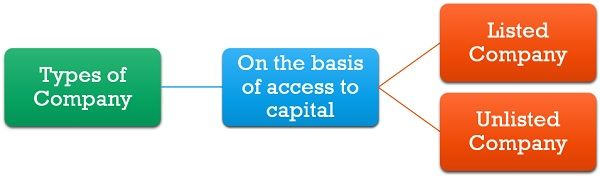
Most companies you hear about every day are listed on the stock exchange, but a huge number of businesses never go public at all. Both types operate with the same goal of growth, but the way they function, raise money, and communicate with investors is completely different. If you are trying to understand how listed and unlisted companies differ, it’s helpful to look at how each one behaves in the real world rather than only in theory.
What a Listed Company Really Is
A listed company is simply a business whose shares trade openly on a stock exchange like the NSE or BSE. Getting listed isn’t easy. It involves meeting SEBI norms, proving financial strength, showing a minimum profit history, and spreading ownership across a wider base so that the public can participate.
Once the company is listed, the work does not stop. It has to keep the market informed at all times. Every quarter, results must be published. Any major event, good or bad, needs to be disclosed. Governance committees must be maintained. Insider trading rules apply. Market participants watch everything.
The benefit is clear. Investors can trade the shares whenever the market is open, and the price is discovered continuously through buying and selling. Liquidity is strong, and information is available regularly.
What an Unlisted Company Looks Like
Unlisted companies are the opposite. Their shares do not trade on any exchange. Ownership usually stays with founders, early employees, private investorssand sometimes institutions that prefer private deals.
They follow the Companies Act and maintain official records, but are not required to publish quarterly results or issue frequent updates. Financials may come out once a year. Some unlisted companies share more with investors, others share very little. That depends on the agreements between the company and its investors.
If someone wants to buy or sell shares in an unlisted company, the process takes time. There is no ready market. A private buyer must be found, paperwork is involved, and the company’s board usually needs to approve it. Liquidity is one of the biggest challenges for investors.
How Listed and Unlisted Companies Differ in Practice
Liquidity
Listed companies offer almost instant liquidity. You can buy or sell shares during trading hours without much difficulty.
Unlisted companies do not. Selling might take weeks or months, and prices depend on private negotiation.
Valuation
Listed companies get valued every second through live market activity.
Unlisted companies do not have that luxury. Their valuation usually appears during funding rounds or when an investor requests it. These values may not match real market potential.
Compliance
Listed companies follow strict SEBI rules that cover disclosures, governance, insider trading, and event reporting.
Unlisted companies have fewer such requirements, which gives them operational freedom but lowers transparency.
Ownership
Listed companies have thousands of shareholders, from retail investors to large institutions.
Unlisted companies often have a tight ownership circle. This affects both decision-making and minority rights.
Raising Capital
Listed companies can raise money quickly through public offers or institutional placements.
Unlisted companies depend on private equity, venture capital, or negotiated debt. These processes take longer and come with conditions.
Governance
Listed companies must maintain a certain board structure, including independent directors and committees.
Unlisted companies may adopt similar practices, but it is not mandatory.
Why People Prefer Listed Companies
Investors like listed companies because they know what they are getting. Information is steady, liquidity is available, and decisions can be made based on real data. Price movements may be unpredictable, but at least everything is visible.
Why People Still Invest in Unlisted Companies
Despite the risks, unlisted companies attract investors who seek early access to potential high-growth stories. Many well-known companies remained unlisted for years before going public. Investors who entered early often saw large returns. Of course, this comes with higher uncertainty and longer holding periods.
Frequently Asked Questions
1. Which one is safer for new investors
Listed companies have more transparency and easier liquidity.
2. Can unlisted companies eventually become listed
Yes. Many do, usually after reaching a certain scale.
3. Why do unlisted shares feel harder to evaluate
Because valuations depend on private negotiations rather than daily market activity.
4. Can retail investors buy unlisted shares
They can, but the process is not as simple as buying listed shares.
5. Do listed companies always perform better
Not necessarily. Performance depends on the business, not the listing status.
Conclusion
Listed and unlisted companies offer different kinds of investment experiences. Listed companies give transparency, liquidity, and structured governance. Unlisted companies offer early access, strategic involvement, and the possibility of higher returns if the business eventually succeeds. The right choice depends on what you want from your investments, how much risk you can tolerate, and how long you are willing to wait.