How to Analyze Unlisted Shares & Pre IPO Companies Before Investing
Published: 5 min read
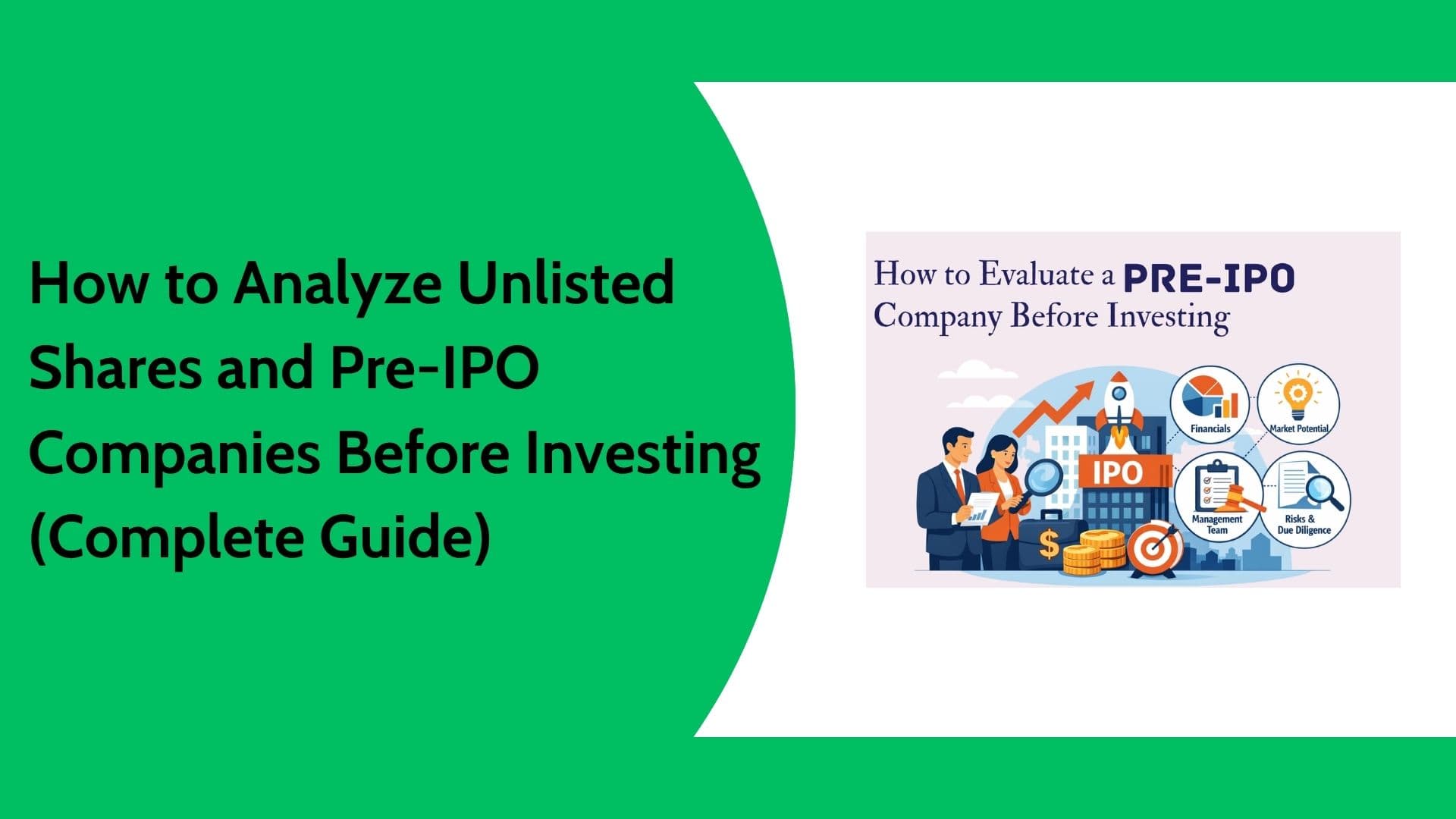
How to Analyze Unlisted Shares and Pre-IPO Companies Before Investing (Complete Guide)
How to Analyze Unlisted Shares and Pre-IPO Companies Before Investing
Investing in unlisted shares sounds exciting. Early entry, lower valuations, and the possibility of strong returns once the company gets listed.
But here’s the reality most new investors overlook.
In private markets, information is limited, liquidity is low, and mistakes are expensive.
Unlike listed stocks, where data is easily available, pre ipo shares demand a more careful and structured approach. You are not just buying shares. You are betting on the future of a business with incomplete visibility.
This guide is designed to help you think like an experienced investor before putting your money into pre-IPO opportunities.
Why Analysis Matters More in Unlisted Markets
In the public market, poor companies get exposed quickly. In private markets, weak businesses can look attractive simply because there is less scrutiny.
That’s why pre ipo shares analysis becomes critical.
Without proper evaluation:
● You may overpay for hype
● You may invest in companies with weak fundamentals
● Your capital may get stuck for years
A disciplined analysis approach reduces these risks significantly.
Step 1: Understand the Business Model Clearly
Before looking at numbers, understand how the company actually makes money.
Ask:
● What problem is the company solving?
● Who are its customers?
● How does it generate revenue?
● Is the model scalable?
If the business model is unclear or overly complex, it’s usually a warning sign.
Simple, understandable businesses are easier to evaluate and often more reliable.
Step 2: Analyze Financial Performance
Even in private companies, some financial data is available through reports, investor decks, or trusted platforms.
Focus on:
Revenue Growth
● Is revenue increasing consistently?
● Is growth organic or driven by one-time factors?
Profitability
● Is the company profitable?
● If not, is there a clear path to profitability?
Cash Flow
● Does the business generate cash or burn it?
High growth with no clear profitability path can be risky in pre ipo shares investing.
Step 3: Evaluate the Industry and Market Potential
A good company in a weak industry may struggle.
Check:
● Industry growth rate
● Competitive intensity
● Market size (TAM)
● Future demand
Companies operating in expanding sectors tend to perform better after listing.
Step 4: Study the Management and Promoters
This is one of the most underrated aspects of how to analyze pre ipo companies.
Look into:
● Promoter experience
● Track record in previous ventures
● Decision-making ability
● Transparency with investors
Strong management can navigate challenges. Weak management can destroy value even in good businesses.
Step 5: Understand Valuation Before You Invest
Valuation is where most investors make mistakes.
Just because a company is unlisted does not mean it is cheap.
Check:
● Revenue multiples
● Profit multiples (if applicable)
● Comparison with listed peers
If the valuation is too high, your future returns may be limited even if the company performs well.
Step 6: Check Shareholding Pattern
Understanding who owns the company gives important signals.
Look for:
● Institutional investors
● Venture capital presence
● Promoter holding percentage
If experienced investors are already involved, it adds credibility. But also check if they are planning to exit soon.
Step 7: Assess Liquidity and Exit Options
This is a major difference between listed and unlisted shares.
Ask:
● When is the expected IPO?
● Is there a secondary market for exit?
● How long might your capital be locked?
Liquidity risk is one of the biggest challenges in pre ipo shares investing.
Step 8: Identify Key Risks
Every investment has risks. The goal is to understand them upfront.
Common risks in pre ipo shares analysis:
● Lack of transparency
● Delayed IPO plans
● Regulatory changes
● Overvaluation
● Business model failure
If risks are not clear, it’s better to stay away.
Step 9: Compare With IPO Opportunities
Before you invest in pre ipo shares, compare:
● Is the company better than current IPO options?
● Does it justify the additional risk?
● Are you getting a meaningful valuation advantage?
Sometimes, waiting for the IPO can be a better decision.
Step 10: Build a Disciplined Investment Approach
Smart investors don’t put all their capital into one opportunity.
Instead:
● Diversify across multiple companies
● Allocate only a portion to unlisted shares
● Avoid emotional decisions
Patience and discipline matter more than timing.
Common Mistakes Investors Make
● Investing based on hype or referrals
● Ignoring financial fundamentals
● Overlooking valuation
● Not understanding exit timelines
● Putting large capital into a single deal
● Confusing early-stage risk with guaranteed high returns
FAQs
1. How to analyze pre IPO companies effectively?
Focus on business model, financials, management quality, valuation, and industry potential before investing.
2. Are unlisted shares safe to invest in?
Unlisted shares carry a higher risk compared to listed stocks due to limited transparency and liquidity.
3. How to invest in pre IPO shares in India?
You can invest in pre ipo shares through trusted platforms or brokers dealing in private market transactions.
4. What is the biggest risk in pre IPO investing?
The biggest risks are a lack of liquidity, a delayed IPO, and overvaluation.
5. Can pre IPO shares give better returns than IPO?
Yes, pre ipo shares can offer higher returns if bought at the right valuation, but the risk is also higher.
Disclaimer
This content is for informational purposes only and should not be considered financial advice. Investments in unlisted shares and pre IPO shares involve significant risks. Please consult a financial advisor before making any investment decisions.