How IPO Listing Price Is Determined | Stock Market Basics Guide
Published: 5 min read
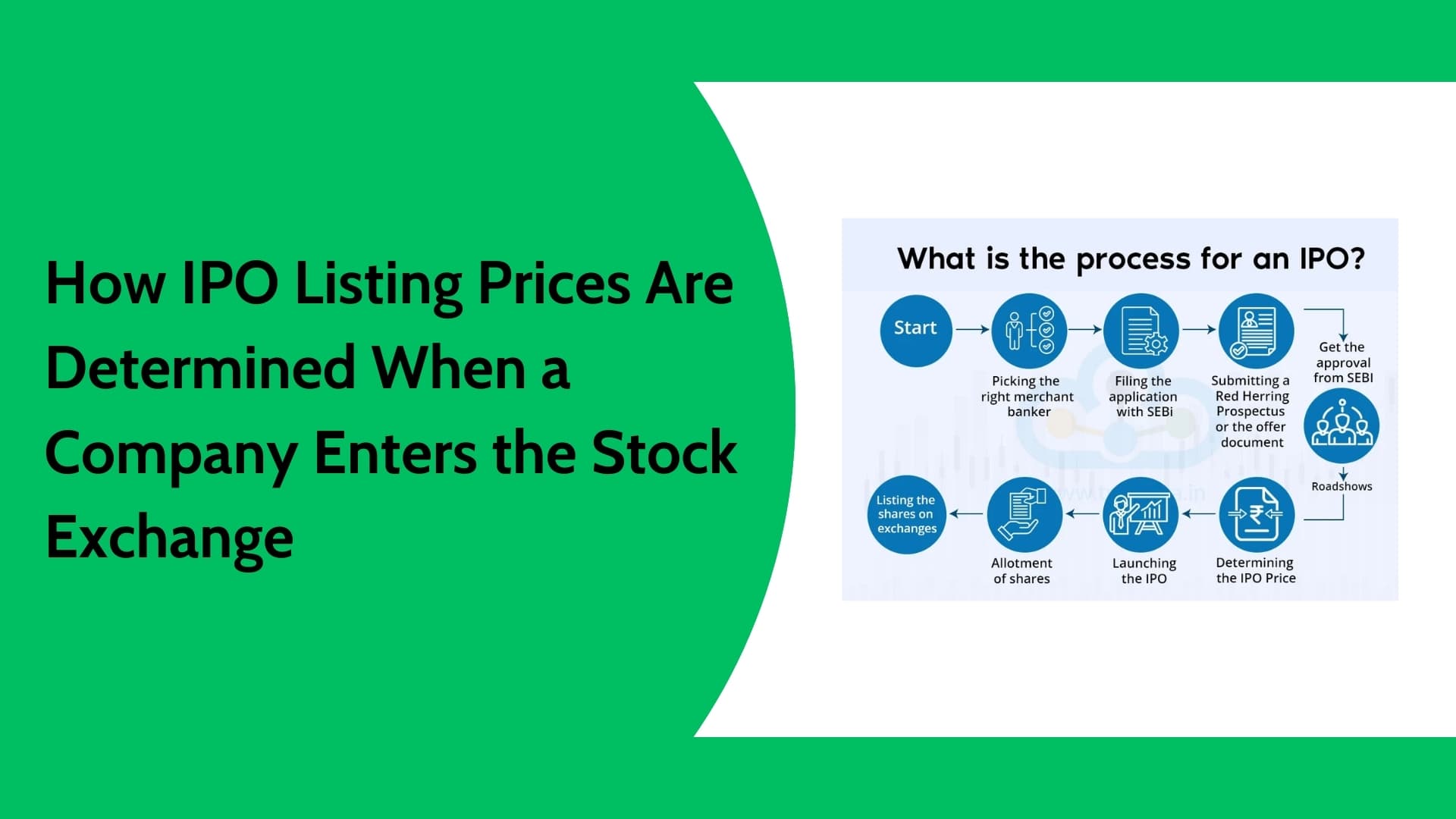
How Stock Prices Are Determined at the Time of an IPO
For many investors, the moment a company launches an IPO is exciting. It’s the first time the public gets the chance to buy shares in that business.
But before trading begins on the stock exchange, an important question has already been answered behind the scenes:
What should the stock price be when the company goes public?
This price, often called the IPO listing price, is not randomly chosen. It is the result of several steps involving valuation, market demand, and investor participation.
Understanding how this process works is an important part of learning stock market basics, especially for investors who are exploring companies before or during their public listing.
What an IPO Really Means
An IPO, or Initial Public Offering, is when a private company decides to offer its shares to the public for the first time.
Before the IPO, ownership of the company may belong to founders, early investors, venture capital firms, or private equity funds. In some cases, investors may also hold pre-IPO shares, which were purchased before the company entered the public market.
Once the company launches its IPO, the shares become available for trading on a stock exchange such as NSE or BSE.
But before this happens, the company must determine a price range that reflects its value and investor demand.
How Companies Estimate Their Initial Share Price
Setting the initial stock prices for an IPO involves a combination of financial analysis and market expectations.
Investment banks usually play a major role in this process. They act as advisors and underwriters for the company planning the IPO.
Several factors are considered during this stage:
● Company revenue and profitability
● Future growth potential
● Industry performance
● Market conditions
● Demand from institutional investors
These elements help determine a reasonable range for the IPO listing price.
The Book Building Process
Most modern IPOs use something known as the book-building process to finalize the price.
Instead of announcing a single fixed price, the company provides a price band. Investors can then place bids within that range.
For example, a company might set an IPO price band between ₹500 and ₹540 per share.
Investors submit bids indicating how many shares they want and at what price within that range.
Once the bidding process is complete, the company reviews all bids and determines the final IPO listing price based on demand.
If demand is strong, the price may settle near the upper end of the range.
Role of Investor Demand in IPO Pricing
Demand plays a major role in determining stock prices during an IPO.
Institutional investors such as mutual funds, pension funds, and large investment firms often participate in the bidding process. Their interest signals how the market perceives the company.
If many investors want to buy the shares, the company may finalize the IPO listing price at a higher level.
On the other hand, if demand is weaker than expected, the final price might be closer to the lower end of the range.
How Pre-IPO Shares Influence Market Expectations
Before a company goes public, some investors may already hold pre-IPO shares.
These shares are typically acquired through private transactions before the public offering.
While these shares are not traded on the stock exchange yet, their transaction prices sometimes provide clues about how the market values the company.
In some cases, the demand for pre-IPO shares reflects strong investor interest, which can influence expectations around the IPO price.
However, the final IPO listing price still depends on the official bidding process and overall market conditions.
What Happens on the Listing Day
Once the IPO process is complete, the shares begin trading on the stock exchange.
This is when real-time price discovery begins.
Even though the company sets an IPO price beforehand, the market ultimately determines the actual trading price once the shares start moving between buyers and sellers.
If investor demand remains strong, the stock may list above the IPO listing price. This is commonly referred to as a listing gain.
However, if demand weakens, the stock may open close to or even below the issue price.
Why Understanding IPO Pricing Matters
Many investors focus only on what happens after a company lists. But understanding how stock prices are initially determined provides valuable insight into the market.
Learning about IPO pricing also helps investors understand broader stock market basics, including how supply, demand, and valuation interact.
For investors interested in early-stage opportunities or companies offering pre-IPO shares, this knowledge becomes even more useful.
It allows investors to better evaluate whether a company’s IPO valuation appears reasonable compared to its fundamentals.
FAQs
What is an IPO listing price?
The IPO listing price is the price at which a company’s shares are offered to investors during its initial public offering.
Who decides the IPO price?
Investment banks, company management, and investor demand together influence the final IPO listing price.
How are stock prices decided during an IPO?
Stock prices during an IPO are determined through valuation analysis, investor demand, and the book-building bidding process.
What role does the stock exchange play in an IPO?
The stock exchange is the platform where the company’s shares begin trading publicly after the IPO process is completed.
Are pre-IPO shares related to IPO pricing?
Yes. Prices at which pre-IPO shares are traded privately may indicate investor expectations, although the final IPO price depends on official market demand.
Disclaimer
This article is for informational purposes only and should not be considered financial or investment advice. Investors should conduct their own research or consult financial professionals before investing in IPOs or pre-IPO shares.